Wednesday, August 28, 2013

Implicit Knowledge

(c) Deltron
The concept of using implicit knowledge in works of art is nothing new. As early as Herodotus, authors and story tellers were incorporating the implicit knowledge to make allusions, references and comparisons for their audiences. 

The same is true of the arts in the modern era. Books, movies, plays and music all trade in common cultural understandings. If a movie about teen love makes a thin reference to Romeo, the audience gets it. It assumed, and rightly so, that anyone consuming a love story is at least casually familiar with Shakespeare's most famous (currently) work. 

What recently struck me was how a large corpus of Science Fiction knowledge is implicit in modern Hip-Hop. I say appreciation because, as I will show, the reference are not derogatory to Science fiction, instead, they are celebratory, positive.  

Any review of rap lyrics will no doubt point out reams of references to movies and cartoons. However, I want to take a fairly recent, highly publicized example, a take a look at the implicit knowledge being assumed. 

Kendrick Lamar (on the now forgotten Big Sean Song 'Control' ) drops this verse:


I've seen niggas transform like villain Decepticons 

The implicit knowledge, and the key to understanding the word-play, is that Decepticons are a race of highly advanced transforming machines.  There is no explanation in the verse regarding Decepticons, or there eternal enemies the Autobots.  It is taken for granted that you a) know what he is referring, and b) appreciate the context in which he is using the reference.

Note: It is often said that people of a certain age and bent fail to appreciate the poetry in Rap, and just see it as wandering lyrical noise. Part of that failure in appreciation is no doubt the result of a lack of implicit knowledge on the part of the consumer. The same could be said for the amount of implicit knowledge bound in a country song that make references to Dale Jr. (ed. you can look that up yourselves).

Kendrick's verse on Control generated a lot of soul searching (or teeth gnashing) depending on who was referenced. We won't go into the other points of contention on the verse, but Twitter is your friend. 

After this verse came out, there were dozens of "response" verses that sought to combat Kendrick's characterization of the entire rap field as "soft" ; with the exception of a chosen few.  

The responses ranged the spectrum from poorly executed, to quite well done. One of the best, also happens to contain a sizable portion of implicit science fiction knowledge. 

Joell Ortiz responded to Kendrick with lyrics that included these lines: 


And never turn, I'm immune to these rappers y'all calling sick.

Currently, apocalyptic fiction is all the rage, be it zombies, plagues, or un-characterized 'other'. The implicit knowledge here is related to zombies as opposed to giant transforming robots. Within these lyrics is the implicit knowledge of what a zombie is and how to dispatch one (hint - splitting a zombie's brain-case).  

Also referenced is the wildly successful TV show "The Walking Dead' (future AMC endorsement?) is a study of man's fight against inhumanity...and Zombies. So too, alludes Joell, that he faces existential struggles against being a 'monster' (Mr. Hyde nee Frankenstein?).  Additionally, the lyrics assume you know and understand that zombies transmit or "turn" others into zombies by bites (generally, although some works would add any fluid transmission). Joell would like you to know that he is immune to this particular disease vector. 

After a few bars related to various West Cost Gang issues, Joel returns to the Sci-fi theme and drops this long sequence that is stuffed with both allusions to Kendrick's verse, but also to popular movie starring Will Smith. 


First off, Hasbro really needs to endorse more rappers, since this was the second reference to its IP by a rapper in a 24 hour period.  Secondly, there is implicit knowledge that not only does Joell's audience know what Independence Day refers, but that they are aware of the Heroic / Tragic fate of Randy Quaid. 

What's the point here? The point is that science fiction (and to a lesser extent Fantasy) have a place in the implicit cultural understandings of an art form that is decidedly "un-nerdy." Sci-fi, fantasy and other types of exploratory fiction have, through no concerted effort, penetrated into the consciousness of rappers and their audiences. 

So, before you listen to someone telling you there is no market in sci-fi directed to people who also like Rap (i.e. young, urban youth) tell them to listen to some rap and see if they can spot the sci-fi.
  

Wednesday, August 7, 2013

Obligations of the Creator

The people that contribute to Moorsgate Media in general, and I particular, think a lot about world building. Be it the setting of rules for a role playing game, the types of magic and monsters that should lurk in the corners of Urban Fantasy, or the types of FTL technologies available to any one race. 

However, there are other considerations that always come up in the scope of world building. What, we wonder, is an author's or designer's obligation to his audience?

Is the writer of a Zombie Apocalypse story required to have his scrappy band of survivors represent, and represent well, every strip and strain of humanity. If he doesn't, has he committed some cardinal sin of fiction? Is a game designer's option to have her female character be a lesbian, mean that she is implicitly writing off the hetrosexual gaming population? Is the reverse true? Is a Gay Male hero saving his boyfriend a "damsel in distress" trope? If not, why? 

Recently, GRRM, author of the widely successful Song of Fire and Ice series ( and TV Show under the Game of Thrones label) has come into some criticism for both the "ethnic" casting of certain characters, and his depictions of whole (made up, but historically analogous) regions. Anyone interested in the specifics of those arguments can find them on the intertubes. 

Similarly, feminist critic Anita Sarkeesian, and others, go into great detail the way that gender is construed in mainstream and indie video games.  Both sets of criticisms are valid and worth your time. However, there is an uncomfortable vagueness of concern that lurks at the core of the criticism. 

Obligation. 

What is the author's obligation. Is a straight, white male obligated to create "others" for the benefit of his audience? Do we want him to? Do we want positive role models for underrepresented peoples to be crafted by the over-represented? If a black lesbian writes a novel, is she obligated to have a positive portrayal of straight white men? Should she? Is the opposite always true?

This is not to say that there is an equivalence between those authors whose trade is tropes and stereotypes and those whose aren't, but the question needs to be asked. Who is the arbitrator of your work?  If the market is, then the market decides if a story-line is a trope, or a re-invention, sufficiently diverse or not. If it is society, then society should be able to produce enough voices that one successful GRRM is countered by other depictions of POC in a fantasy setting. 

If that's not the case, and I think any cursory reading of widely successful new IP in the sci-fi and fantasy space says its not. Then we have to ask why? Where are the sweeping Tolkien-esq epics featuring POC characters? Where are the gripping video-games with all female-leads? Do the underrepresented have an obligation to create for themselves, as well as criticize. 

Friday, July 19, 2013

Test Readers


We are currently preparing to launch our next (and really first) project. The name is still encrypted, but if you are interested in being a test reader / test user then drop us a line, Let us know an electronic address that we and contact you at. For a taste of the project: see below.


The door shrieked in protest. Rust flecked hinges popped and rang as they separated from the wood beneath. The sound reverberated around the room and dove into Maura’s ears.

“The widow!” Paul jabbed his finger to point across the gulf between them.
She turned and looked out the casement window. The checkerboard of glass framed the harvest moon with a jeweler's skill.

Paul grabbed the faded dresser and began wrestling it away from the wall. The whitewashed mass refused to budge until he wedged his knees behind it and strained.

A piercing crack from the door drove electric convulsions down Maura's spine. The wood frame splintered, slivers of carved driftwood coughed onto the floor boards.

Paul leaned into the dresser and pushed; his bare feet slipped, scraped and grasped for traction. Slowly, too slowly, the antique began to move. Progress was marked in thin trails of blood upon the wide-plank floor.

Tuesday, June 18, 2013

Context


When looking at this picture I was initially amazed, since I believed it to be something that it is not.

What it is, is a group of businessmen looking at the hull of a larger early 20th century cruise liner. Possibly the Titanic, but it could be anything from the Lusitania to some unknown ship that was sunk during the Battle of the Atlantic.

However, what it looked to me at first glance, was the undercarriage of a great Airship. These gentlemen, these Aeronauts, were proudly embarking on a circumnavigation of the globe in their floating dreadnought. Armed with wits and guns and inevitable communicable diseases, they would venture into the dense jungles of Amazonia . On their journeys, they would encounter the fabled lost cities described by defrocked Jesuit Francisco DeOriana, fight dangerous Air-Pirates and commit wanton acts of Derring-Do.

Of course, none of this happened, but it is an important lesson for any story teller or historian. Context matters. Context told me I was looking at the ribs of a giant inflatable balloon, not the walkways to a ship deck.

Context matters to story tellers because we can slant stories in a certain way. Make certain people the heroes or the villains, depending on the context, depending on the point of view.

In fiction, it used to be that POCs were typically the enemy, or if not worthy of fear, then contempt.
 (See Armageddon 2419AD for a pretty racist view of both Asians and Africans)

POC and depictions of them have changed in the 80 years since 2419 published. Partly that is because of context. Consumers and their tastes have changed. While POC have not achieved parity in terms of "hero" status, actors such as Will Smith and Vin Diesel have proven that there is a commercial market for a POC as the heroic lead.  In order to see greater representation in both interactive and static entertainment, authors have to continue to shift the context.

However, context shifting has to be more than preaching to some POC choir. It has to involve moving the context of what a hero does, what he or she looks like, and what is the nature of heroism. If you are fighting on someone else's ground, you will always be seen in their context.

It would like to say that we at MM are doing that, but the honest truth is that we haven't done it well enough.


Monday, June 10, 2013

The Great Balloon Race

Short Fiction in visual form: 
Every so often, we come across works that are compelling but incomplete. Some combination of tone, world, and voice conspires to make us want to know more. However, due to deadlines, budgets and other commitments, some concepts get left to wither. Short Visual Fiction posts attempt to reconcile some of the art work we have laying around with some text that never went any where. 
(C) 2013 Moorsgate Media (www.moorsagtemedia.com)

-The Bear-Men of Kodiac Island:

Jonah pulled the handle. As he did, orange flames shot from the top of the central stack. The quilted frame of the Aeypher expanded, pulling the guide line tight.

"More!" Captain Bluenose shouted from behind the giant steering gear. "We need more altitude if we are to catch the Prince of Crystal River."

Jonah took the iron handle and yanked with both hands, laughing as he did. Slowly, the Aeypher began to rise.

Below them, in the wilds of Kodiac Island, the Bear-Men called in loud grunts and hollers.

"The Bear-Men hold no love of the Prince!", Bluenose called through the wind.

"Why?" Jonah asked as he peered over the side railing. Below the wisps of sooty smoke wafted from the Wigwams of the Bear-Men.

"The Prince and the Bear-Men both love the Salmon of the Crystal River. The Prince pays a handsome price for any fish brought to his cooks. Knowing his appetite, the Red Catchers swarm the River and catch as much as they can. This leaves the Bear-Men very hungry. Very hungry indeed."

"Hungry enough to eat people?" Jonah stepped back from the abyss. A breeze caught his school coat and flung his tartan tie around his neck like a scarf.

"Silly boy!", tall Captain Bluenose laughed as he tucked long braids under the Gold trimmed Tri-corner hat; "Bear-Men will always eat a tasty man...or boy...hungry or not."

Jonah stared, trying to decipher if the statement held a hidden jest. If not, there was a lot he had to learn about being a Pirate of the Western Sky.

-An excerpt and artwork from the unloved and unfinished "Pirates of the Western Sky" by Grant Chambers 

Sunday, May 19, 2013

Character Customization and Diversity in games.

Smokey Shep
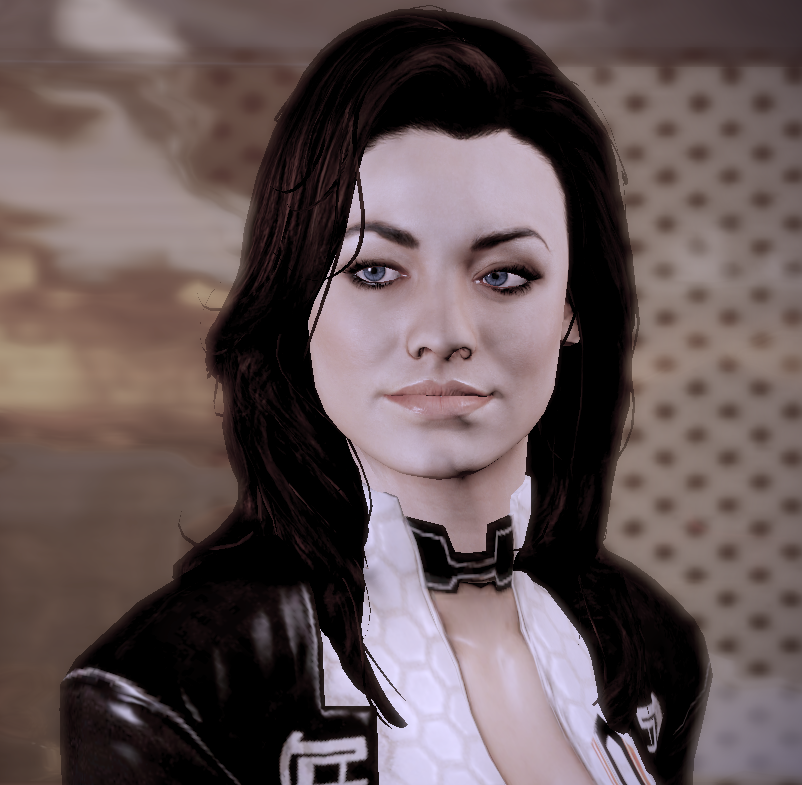
I am working my way through the Mass Effect Trilogy.  I know, a bit late to the party. While the story so far is great (i am in the middle of ME2) I am aware that there is some disappointment coming in the form of multiple shady endings in ME3. From what I hear, this has been compounded by Bioware's attempt to correct the problem by asking people to buy a better ending.

Outrage at customer gouging aside, this is all besides the point.  Right now, my Shepard, who happens to be black-ish, is having a great time working for the Illusive Man and whipping the Normandy-2 around with Miranda and Jacob.  What struck me was that this was the first time I had ever experienced a Space-Opera with Non-white males as the leads. Sure, some Sci-fi (Avery Brooks and DS9 is the gold standard) feature non-white leads. However, that is baritone exception to the rule.   Space Opera, as a genera, is consistently homogeneous is its heroes.

However, in ME I am able to change the dynamic. Between myself, Miranda and Jacob; the majority of the speaking roles in ME2 main are taken by non-traditional voices. This would be even more the case if I had decided to play as female Shepard. (Lesbian space commander FTW!).  What really struck me was that this situation is not explicitly called for by the game designers. Alternatively, the selection of ethnic identity and gender is not forbidden or frowned upon. There is no downside for a dark skinned Shepard, Reapers are equal opportunity villains.

This all begs a question. If interactive story telling is the wave of the future, does it matter who is telling the story and what their point of view is? Is it even important to worry about the background of major and minor characters.  For instance, there was a dust up with certain fans of the Hunger Games reacting negatively to the character of Rue. While I thought it was clear that she was a person of color (even a bit heavy-handed ) a great number of readers were shocked (and sadly) disappointed when they went to the movie and saw Amandla Stenberg. If the future, authors might try to obscure the ethnicity of their characters so as to avoid the problem altogether. This works even better if your hope is to have a movie made. Let the director decide what the characters look like.
people got mad I was accurately depicted as I was described in the book

Alternatively, interactive media reduces, if someone wanted to, these unpleasant circumstances. The writer merely tells a universal story; the hero's journey; the fight against the evil empire; the war against the un-dead, and then lets the recipient pick the look of the character.
This creates a frame work for the user/reader to import their own ideas of the character.

While this could mean that more stories become accessible to different people of different backgrounds, there is a danger. Some people are never able to separate a character from their own baggage regarding race or gender.  One of the great powers of story telling is to make the reader witness the eyes through the author's intended vessel. Sometimes that is a standard hero cut from central casting, but sometimes its not. Discourse would be lost if you were never tasked with following a specific person, with a specific background and specific world view. Simply making a character look a certain way is not the same as creating a believable member of a particular group. Believable characters, regardless of background is something the story teller should always aspire.

Moorsgate media

Monday, May 13, 2013

The Awesome Sci-fi Styling of Afro-Futurism Album Covers: Parliament Edition

George Clinton, musician, actor, sci-fi funk evangelist is known and loved the world over as the front man for Fuck Super Group Parliament - Funkadelic.

Originally a "doo-wap" group founded in the late 50's, Parliament would later be converted by George Clinton to atmospheric funk super-stardom

Around the same time that Parliment was being retrofitted for the glories of the 70's,  Clinton also started the band Funkadelic.

In reality, the two groups were always related. Funkadelic was mainly a vehicle for showcasing artists of Parliament. At the time, Clinton was involved in a contractual dispute that left him without the use of the name Parliament." Over time, both groups were marketed as displaying variations on the theme of Funk, even though the same musicians were rotating between the two.

Eventually, Clinton combined the groups into the Afro-futurist super group Parliament-Funkadelic, or as it is more commonly known, "P-Funk."

What follows is the solid gold awesome which are some Parliament / Funkadelic Album covers.

The Clones of Dr. Funkenstein -


Funkentelechy vs the placebo syndrome --


The Electric Spanking of War Babies - 


Cosmic Slop


There are soo many more. Pedro Bell is the artist of the last three. Combining high school doodle eroticism with...well high school doodle Sci-fi, is a great way to make lasting album covers.